Known OE reference
Provide the number, vehicle position and market. Confirm that the reference is current and note any variation in the installed sensor or flange.
QUICK SPEC
Compare the information you have with the details needed for a meaningful wheel-end review.
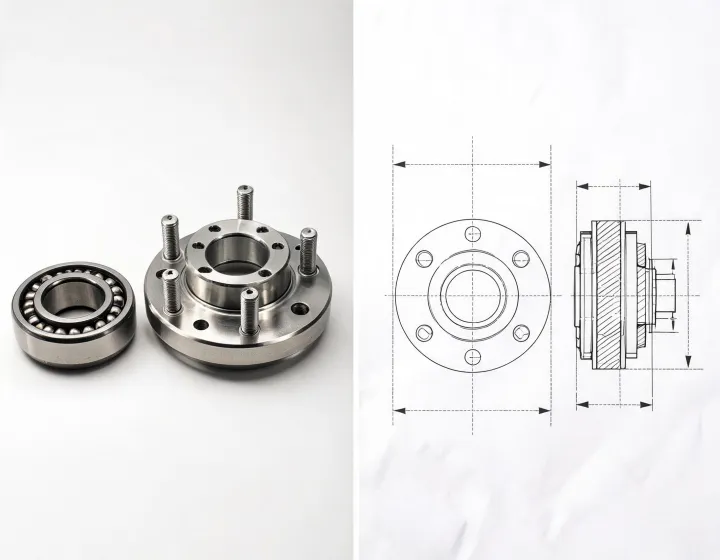
Use this interactive list to track information you have gathered. It stays in your browser and does not establish product fitment.
| Input | Why it matters | Useful evidence |
|---|---|---|
| Dimensions | Establish mating geometry | Drawing or measured sample |
| Seal and encoder | Identify environmental and sensor interfaces | Images and interface drawing |
| Duty | Define the validation context | Load and operating profile |
Provide the number, vehicle position and market. Confirm that the reference is current and note any variation in the installed sensor or flange.
Record dimensions and photographs of the seal, flange and encoder. A physical sample can support review when documentation is incomplete.
Share the drawing revision, operating profile and intended validation plan. Include forecast volume and target timing so supply questions are visible.
An integrated hub unit combines interfaces and may reduce variation in field assembly; a serviceable bearing can allow replacement of an individual component on compatible platforms. The choice depends on approved service procedures, tooling, parts scope and inventory costs. Neither option is interchangeable without confirming fitment and sensor compatibility. Bearing bore, outside diameter and width should be recorded in millimetres from the drawing or measured sample; a dimension alone does not establish load capacity. A checklist cannot replace an engineering review. For a service application, consult the vehicle manufacturer’s procedures and identify whether the requested scope includes a complete assembly or individual components.
List what is known and flag what remains open. The inquiry can be refined as drawings and application details become available.